What Is Castor Oil?
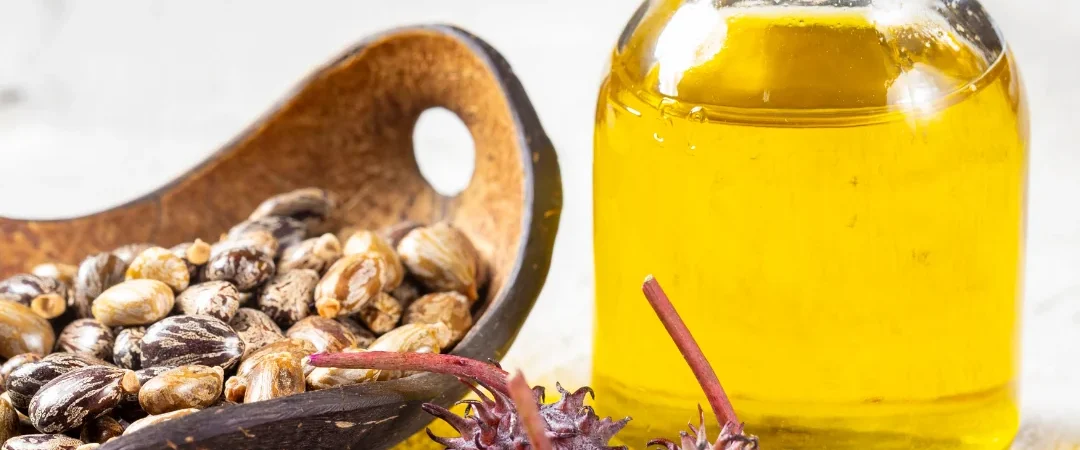
Castor oil is a thick, pale-yellow vegetable oil made by pressing the seeds of the castor plant (Ricinus communis). It has been used for thousands of years in traditional medicine, skincare, and hair care across Africa, India, the Caribbean, and many other parts of the world.
Today, castor oil is found in many beauty and skincare products because of its excellent moisturizing and protective properties. It is especially valued for helping keep the skin soft, supporting healthy-looking hair, and improving the appearance of dry or damaged skin. Research also suggests it has anti-inflammatory, antioxidant, and antimicrobial properties, making it a useful ingredient in modern dermatology.
What Is Castor Oil?
Castor oil is obtained from the seeds of the Ricinus communis plant, commonly known as the castor bean plant.
The oil is unusual compared with many other vegetable oils because its fatty-acid profile is dominated by ricinoleic acid, a monounsaturated fatty acid that gives castor oil many of its distinctive physical and cosmetic characteristics.
Castor oil is naturally:
Thick and viscous
Rich and emollient
Highly lubricating
Glossy in appearance
Useful for conditioning skin and hair
An excellent ingredient for many cosmetic formulations
In cosmetics, castor oil is primarily used as a skin-conditioning agent, while also serving various formulation functions. A 2025 Cosmetic Ingredient Review assessment concluded that castor oil is safe for use as a cosmetic ingredient under the practices and concentrations evaluated.
How Is Castor Oil Made?
The way castor seeds are processed has an important effect on the characteristics of the finished oil.
Step 1: Harvesting the Castor Seeds
Mature castor seeds are harvested from the castor plant.
The seeds are then separated from the plant material and cleaned to remove dirt, leaves, stems and other foreign material.
Step 2: Cleaning and Sorting
The seeds are carefully cleaned and sorted.
Damaged or unsuitable seeds may be removed before processing.
Good-quality raw material is important because the quality of the finished oil begins with the quality of the seeds.
Step 3: Pressing the Seeds
One traditional method of producing castor oil is mechanical pressing.
In cold pressing, the cleaned seeds are crushed and mechanically pressed without intentionally heating them during extraction.
The European Medicines Agency describes cold expression as extraction by crushing and pressing the seeds without heating.
The resulting liquid contains the oil together with small amounts of naturally occurring suspended material.
Step 4: Filtration and Clarification
The freshly pressed oil is filtered or otherwise clarified to remove suspended seed particles and other impurities.
Further processing may be used depending on whether the manufacturer wants a raw, virgin, cosmetic-grade, pharmaceutical-grade or refined oil.
Step 5: Refining
Commercial castor oil can undergo additional refining processes.
These can include:
Filtration
Degumming
Neutralisation
Bleaching
Deodorisation
Refining can produce a lighter-coloured, more uniform and more stable oil suitable for particular cosmetic, pharmaceutical or industrial applications.
This is an important distinction when shopping for castor oil: “cold pressed,” “unrefined,” “refined,” “organic,” and “cosmetic grade” do not all mean the same thing.
What Makes Castor Oil Special?
About 90% of castor oil is made up of a unique fatty acid called ricinoleic acid.
This is what gives castor oil many of its beneficial properties. Ricinoleic acid helps:
Lock moisture into the skin
Reduce water loss from the skin
Soothe irritation
Help protect against certain bacteria and fungi
Support the skin’s natural healing process
Provide antioxidant protection against environmental damage
Unlike many vegetable oils, castor oil is very thick, which allows it to stay on the skin longer and create a protective barrier that helps keep skin hydrated.
What Is Castor Oil Used For?
1. Moisturising Dry Skin
One of castor oil’s best-known uses is as a natural moisturizer.
It forms a protective layer on the skin that helps prevent moisture from escaping, leaving the skin feeling soft, smooth, and hydrated.
People commonly use it for:
- Dry skin
- Rough elbows
- Dry knees
- Cracked heels
- Dry hands
- Chapped lips
2. Hair and Scalp Care
Castor oil has been used for generations to care for hair.
Although there is limited scientific evidence that it directly causes hair to grow faster, studies suggest it can improve:
- Hair shine
- Hair softness
- Hair manageability
- Scalp moisture
Researchers also believe ricinoleic acid may help create a healthier environment for hair growth by reducing inflammation around hair follicles. More studies are still needed to confirm this effect.
3. Eyebrows and Eyelashes
Many people apply a tiny amount of castor oil to their eyebrows and eyelashes.
While scientific proof that it stimulates new hair growth is limited, keeping these hairs moisturized may reduce breakage, making them appear fuller and healthier over time.
4. Supporting Healthy Skin
Research suggests castor oil may help improve the appearance of:
- Fine lines
- Rough skin
- Dry patches
- Uneven skin tone
- Dark marks after spots have healed
Its antioxidant properties help protect the skin from everyday environmental damage, while its moisturizing effect improves skin elasticity and texture.
5. Acne-Prone Skin
Although castor oil is rich and thick, it contains natural compounds with antibacterial and anti-inflammatory properties.
These may help reduce the redness and irritation associated with acne. However, because castor oil is very rich, people with oily or acne-prone skin should use it sparingly and patch-test first.
6. Minor Cuts and Healing Skin
Castor oil creates a moist environment that supports the skin’s natural healing process.
For this reason, it is sometimes included in wound-care products used under medical supervision. It should only be applied to minor, clean skin injuries—not deep wounds or infected cuts unless advised by a healthcare professional.
7. Joints & Arthritis
Can castor oil help with joint pain and arthritis?
Castor oil may offer modest relief for joint pain, and the likely reason is ricinoleic acid, its main component. In mouse experiments, repeated topical application of ricinoleic acid over eight days sharply reduced induced paw swelling and lowered tissue levels of substance P, a pain-signaling neuropeptide, an effect similar to capsaicin’s but without the burning sensation.
In a 2009 randomized trial, 100 adults with knee osteoarthritis took either castor oil capsules or diclofenac for four weeks, and both groups improved significantly, with no adverse effects reported for castor oil.
How Does Castor Oil Work?
Castor oil works in several ways:
It locks in moisture
It forms a protective layer over the skin that reduces water loss, helping skin stay soft and hydrated.
It calms irritation
Ricinoleic acid has natural anti-inflammatory properties that may help soothe irritated skin.
It protects the skin
Castor oil contains antioxidants that help protect skin cells from damage caused by pollution and sunlight.
It supports healthy bacteria balance
Its antimicrobial properties may help reduce the growth of certain bacteria and fungi on the skin.
It helps other skincare ingredients absorb better
Castor oil is often added to creams and ointments because it can improve the penetration of other beneficial ingredients into the skin.
It Reduces Inflammation
Applied to aching joints, it reduces the inflammation and thus the pain.
How to Use Castor Oil
For the Face
- Wash and dry your face.
- Apply 2–3 drops of castor oil.
- Gently massage into the skin.
- Leave on overnight or wipe off after 20–30 minutes if your skin feels too oily.
If you have oily skin, mix castor oil with a lighter oil such as jojoba, grape seed, or sweet almond oil.
If you have oily skin, mix castor oil with a lighter oil such as jojoba, grapeseed, or sweet almond oil.
For Hair
· Warm a small amount between your hands.
· Massage into the scalp for 5–10 minutes.
· Work the remaining oil through the hair.
· Leave on for at least 30 minutes or overnight.
· Shampoo thoroughly to remove the oil.
Because castor oil is very thick, many people mix it with coconut, olive, or argan oil to make it easier to apply.
For Eyebrows and Eyelashes
Dip a clean cotton bud or mascara brush into a tiny amount of oil.
Apply lightly before bedtime.
Avoid getting the oil into your eyes.
For Dry Skin
Massage a small amount into:
- Hands
- Feet
- Elbows
- Knees
- Heels
- Any dry areas of the body
Use once or twice daily as needed.
How Often Should You Use It?
Face: 2–4 times per week, depending on your skin type.
Hair: 1–2 times each week.
Eyebrows and eyelashes: Once daily, preferably at night.
Dry skin: Daily or whenever needed.
Guide to creating a castor oil pack
You can craft and utilize your very own castor oil packs with just a few materials.
Naturopathic practitioners suggest searching for castor oil that is free from hexane.
Ingredients and materials
To whip up your own, gather these essentials:
- castor oil
- unbleached wool or cotton flannel
- medium-sized bowl or container
- tongs
- scissors
- plastic covering, like a small tablecloth or trash bag
Instructions
Cut the wool or cotton flannel into rectangular shapes, approximating 12 inches by 10 inches. Feel free to cut them into strips or smaller squares based on your intended use.
Utilize a minimum of three to four pieces of cloth to assemble a pack.
Pour castor oil into the container. Ensure you can thoroughly saturate a piece of wool or cotton flannel with the castor oil.
- Immerse the first cloth piece into the oil until it is fully soaked.
- Utilize the tongs to retrieve the cloth from the container; it should be dripping with castor oil.
- Position the drenched cloth flat on the plastic covering.
- Saturate the additional two or more cloth pieces in the same manner.
- Layer the oil-drenched cloths flat on top the initial cloth.
- After soaking and layering each piece, you’ve successfully crafted a castor oil pack.
Castor oil pack alternatives
You can purchase castor oil online or at stores that specialize in herbal and natural remedies. Additionally, castor oil pack kits are available online if you prefer not to DIY.
How to apply your castor oil pack
Recline on a large towel or sheet to capture any drips of castor oil.
Place the castor oil pack on the area you wish to treat. For instance, if addressing constipation or other digestive issues, you’ll typically position it over your abdomen.
Lay a small plastic sheet over the castor oil pack. This aids in heating the pack and pressing it against your skin.
If desired, you may place a hot water bottle or heating pad atop the plastic for extra warmth. Ensure you don’t doze off with the heating castor oil pack, as this may result in burns or other harm.
Keep the pack on for about 45 minutes to one hour.
Remove the pack and cleanse the area with a warm damp cloth.
You can store the castor oil pack in the soaking container. Ensure it’s covered and refrigerated. Each castor oil pack can be reused up to 30 times.
Side effects and precautions
Some individuals might have an allergic reaction to castor oil. It may induce skin rashes or reactions when applied to the body. If you’re new to castor oil packs, conduct a patch test:
Massage a few drops of castor oil onto your skin and leave it for 24 hours.
If no reactions occur, a castor oil pack should be safe for you to use.
Warnings with castor oil packs
Refrain from using castor oil packs if you are pregnant or breastfeeding. The impact of castor oil on a baby is unknown.
Do not heat a castor oil pack in the microwave. The cloth and oil can emit smoke or ignite.
Avoid using castor oil packs on recent injuries or open or irritated skin, such as healing scratches or cuts.
Is Castor Oil Safe?
For most people, castor oil is very safe when used on the skin.
However:
Always perform a patch test before first use.
Stop using it if redness, itching, or irritation develops.
Avoid getting it into your eyes.
Do not apply it to infected or severely damaged skin without medical advice.
Commercially produced, purified castor oil does not contain ricin and is considered safe for topical use.
Final Thoughts
Castor oil has stood the test of time as one of nature’s most versatile beauty oils. Rich in ricinoleic acid, it deeply moisturizes the skin, helps improve hair shine and softness, supports the skin’s natural barrier, and may help soothe minor irritation. While more high-quality clinical studies are still needed to confirm some traditional claims—especially regarding hair growth—the current evidence supports its role as an effective moisturizer and a valuable ingredient in skincare and haircare.
Whether you’re looking to nourish dry skin, condition your hair, or add a natural oil to your beauty routine, castor oil is a simple, affordable, and versatile choice when used correctly.
REFERENCES
1. Girdler et al. — Use of Castor Oil in Dermatology: A Narrative Review (2026)
Journal: Cureus, 18(2), e103289
DOI: 10.7759/cureus.103289
Authors: Kathleen Girdler, Angelica Cabatu, Hailey Olds & Geoffrey A. Potts
This is probably the most useful recent scientific reference for your castor-oil content because it specifically reviews dermatological applications.
The review examined research involving castor oil and castor-oil-derived compounds in areas including skin hydration, hair, acne, hyperpigmentation, wound healing and skin ageing.
Extract from the paper:
“Castor oil has a long history of use in traditional medicine and cosmetics.”
The authors also report that castor oil has been investigated for hair quality, hyperpigmentation, hydration, elasticity and signs of skin aging, while noting that more research is needed to establish optimal uses and formulations.
Read the full research paper on PubMed
2. Phong et al. — Coconut, Castor, and Argan Oil for Hair in Skin of Color Patients: A Systematic Review (2022)
Journal: Journal of Drugs in Dermatology, 21(7), 751–757
DOI: 10.36849/JDD.6972
Authors: Celine H. Phong et al.
This is particularly useful because it looked specifically at claims concerning hair growth and hair quality.
The researchers reviewed 22 articles concerning coconut, castor and argan oils.
Extract:
“There is weaker evidence for castor oil improving hair quality by increasing hair luster.”
Importantly, the review found no strong evidence that castor oil promotes hair growth or treats hair infestation.
This distinction is important for your marketing: you can reasonably discuss castor oil as a conditioning/hair-care oil, but you shouldn’t advertise it as scientifically proven to grow hair.
Read the systematic review on PubMed
3. Vieira et al. — Castor oil induces laxation and uterus contraction via ricinoleic acid activating prostaglandin EP3 receptors
This research investigated how castor oil produces its well-known laxative effect.
The researchers found that ricinoleic acid—the major active fatty acid in castor oil—interacts with EP3 prostaglandin receptors. In animal experiments, removing the EP3 receptor eliminated the laxative response to castor oil.
Extract:
“Ricinoleic acid was able to displace PGE₂ from EP₃ receptors…”
The research provides a biological explanation for why castor oil has traditionally been used as a laxative.
Important: this evidence concerns oral castor oil, not simply applying castor oil to the skin.
Read the research on PubMed Central
4. Arslan & Eşer — An examination of the effect of castor oil packs on constipation in the elderly (2011)
Journal: Complementary Therapies in Clinical Practice, 17(1), 58–62
DOI: 10.1016/j.ctcp.2010.04.004
This is interesting because it examined topical castor-oil packs, rather than people drinking castor oil.
The study followed elderly participants and assessed the effects of castor-oil pack administration on constipation symptoms. The researchers found improvements in stool consistency, straining and the sensation of complete evacuation, although the packs did not increase the number of bowel movements or amount of stool.
Extract:
“COP may be used for controlling symptoms of constipation.”
However, this was a relatively small study and more should be conducted to show castor-oil packs treat constipation.
5. Chemical modifications of castor oil: A review (2019)
This review is particularly useful for explaining what makes castor oil chemically different from many other vegetable oils.
One of its key points is that castor oil is exceptionally rich in ricinoleic acid, which accounts for approximately 90% of its fatty-acid content.
Extract:
“The ricinoleic acid forms approximately 90% of the total fatty acid content in castor oil…”
Ricinoleic acid contains a hydroxyl group, which contributes to castor oil’s distinctive physical properties, including its relatively high viscosity and unusual solubility characteristics.